
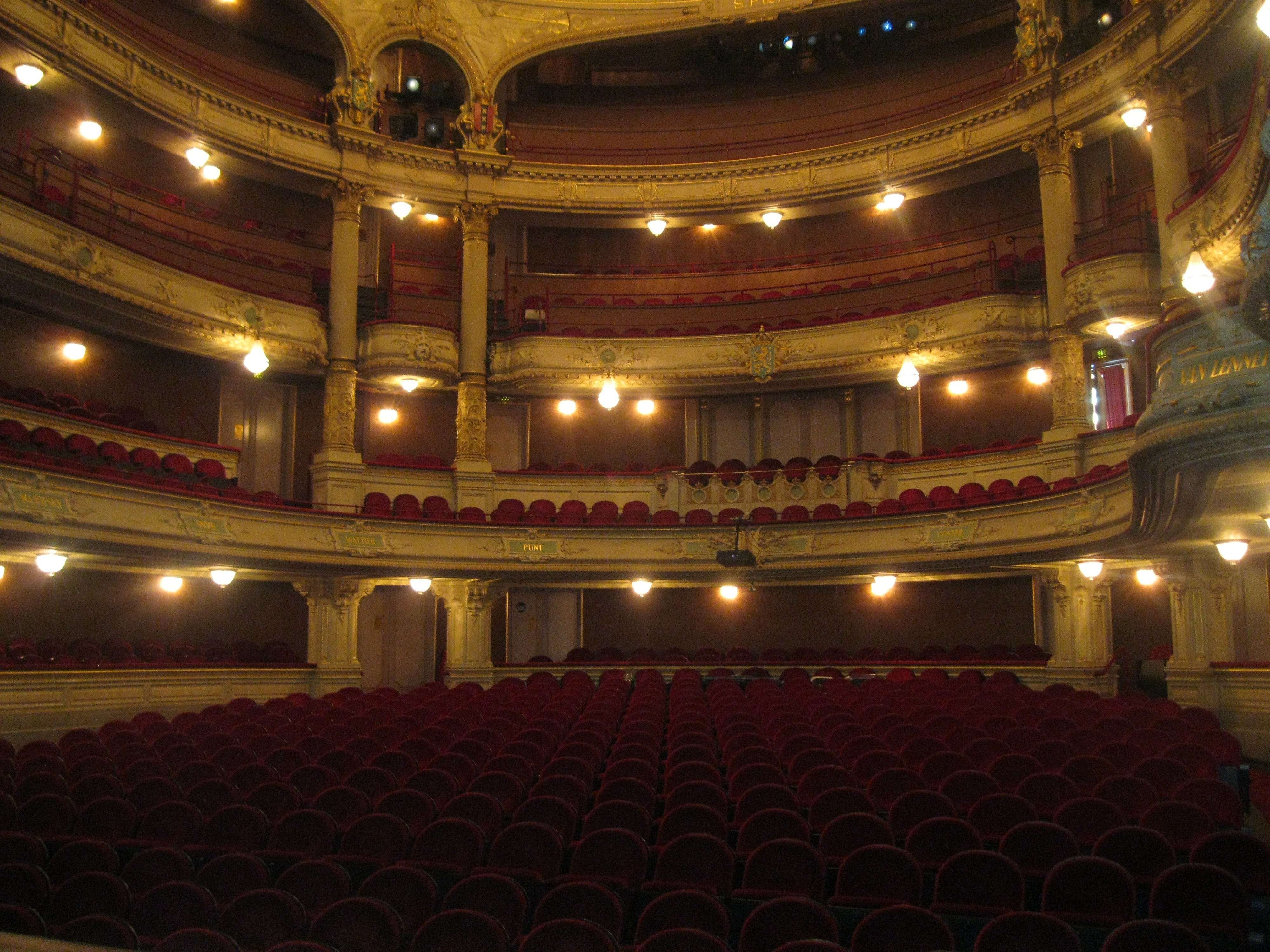
I recently wrote about The Mikado: discovering it as a teenager, sitting alone in the dark in the balcony of a theatre. As a work of art The Mikado can be read in a number of ways; as a satirical romp, romantic comedy, a study of societal hierarchies. I read it as a show about identity, how we code-switch depending on situation, the way we try on different identities, our ability to choose our own identity.
I often write about identity. Specifically, I find myself writing about how musical theatre has shaped my identity, how, through musical theatre, I have come to understand, not only how the world works, but my own place in it.
I wanted to build a life in theatre because I intuited from a very early age that within the theatre community I might find acceptance. And not just acceptance. Freedom. I wanted to run away and join the circus, or at least, the late 20th century equivalent.
I come from a conservative Catholic tradition where children were seen and not heard, where any display of individuality was frowned upon, where drawing attention to oneself in any way was vulgar.
At home, I was taught to be small, to fit in. Being different was dangerous and needed to be stamped out.
But away from home, working in theatre, I found a world where difference was celebrated, not tolerated. Where being vivid was welcomed. Where I was allowed to express myself without fear. A costume, some make-up, a wig and I could become someone else on stage. Learning I could play with other identities on stage allowed me to understand that I could also do the same off-stage. Identity was not fixed; it was not chosen for you, you did not have to obey someone else’s rules. Your identity was unique to you and the journey of life was to explore that.
My theatre family were all ages, races, genders, sexualities, cultures. Come play with us, they called. Come learn from us. Come expand with us.
My family, my school, they imposed identity on me. Theatre exposed it.
This weekend I went to the theatre with my husband to watch a musical, Hadestown. A musical that asks its audience to toast “the world we dream about, and the one we live in now.” I left the theatre uplifted and, as always after the theatre, with the feeling that even in an audience of hundreds, I had been seen. Because theatre is not only my chosen family, it is my language, my way of being, my life.
Walking home someone shouted a homophobic slur at me. From the world we dream of, to the one we live in.
In a single word, a total stranger imposed their version of my identity on me. Without permission, without consent, they determined my meaning, not with me, but at me.
But just as the painting hanging in the gallery is not the end of the story, neither does the work on stage determine the meaning.
In the foundational text “The Death of the Author,” the literary theorist Roland Barthes argues: “a text’s unity lies not in its origin but in its destination.” To put it simply, it is the audience that determines meaning, not the author. Theatre is a collaborative art form, musical theatre particularly so. The work itself is rarely completed by just one voice, one writer, and the work on stage: never. It is shaped by dozens of voices, hundreds of points-of-view, thousands of decisions.
My decision to build a life in theatre was not, it turns out, about running away to join the circus but about deciding to make a life in the company of those who saw me and valued me for who I am. A choice to stand alongside others and to see them for who they are. And a commitment that together we would stand in front of an audience and show them the world we dream of.
In theatre we negotiate meaning. Interpretation is collaboration. Artists gather on stage to make a piece of art in front of the audience inviting them to meet us in the same imaginative space. We come together in agreement: we will show your our art, we will guide you, we will help you to see. We ask for your attention and your empathy. We will allow you to determine meaning.
But Barthes’ thesis assumes good faith on behalf of the audience. What happens when the audience is hostile? When interpretation is weaponised? Art invites meaning but it doesn’t necessarily change behaviour. Outside the theatre there is no agreement. A stranger in the street does not collaborate in the construction of meaning, there is no negotiation. They impose. They dictate. And they believe in their absolute right to be the final arbiter. Their voice says: I see you, I name you, I fix you.
That voice is not an aberration. That voice is the reason we make art. It is the condition the art exists in response to. The art is the counter-argument.
Art is negotiating, not dictating. The rehearsal room is not isolated from the world: it is where society is built. Art is made through conversations and developed by listening. It is created through collaboration and intended to be shared. The work endures because the people who make it have chosen, at some personal cost, to live inside the argument. They trust, they hope, that they have given the audience what they need but left enough unresolved to allow them to complete the picture for themselves. The audience are also collaborators.
And artists choose to do this, not because they hope it will make them rich or famous, but because they believe it matters. Because the theatre is a space where we choose to live freely, where we became who we are, where we found our home.
Sometimes a voice shouting in the street is louder than the song we sing together.
But the song will echo longer.