
My progress report
concerning my journey to the palace of wisdom
is discouraging.
I lack certain indispensable aptitudes.
Furthermore, it appears
that I packed the wrong things.
James Baldwin’s Inventory/On Being 52 resonates deeply with me today, in particular, because it’s my 52nd birthday. A birthday is always a good time to assess and take inventory of the year just passed and this year has, at times, felt like a reckoning.
People often refer to their fifties as the beginning of their ‘third act’ and I have been asked a few times this year what my third act will be. At 52 it seems that one should know what they want to be when they grow up. At 52, the years no longer stretch out before you shimmering with promise. At 52 you are not planning your future; you are living in the one you built.
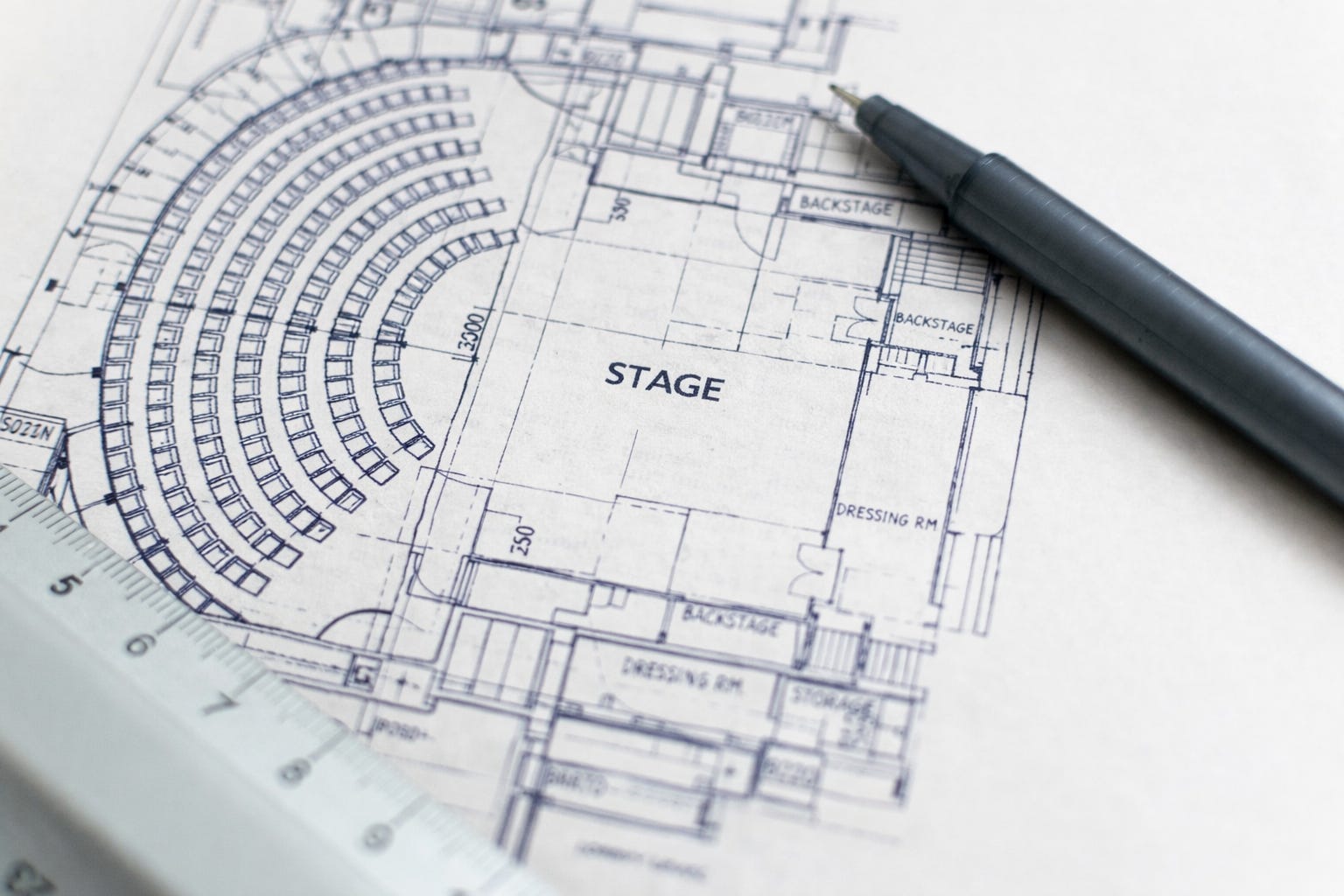
The first act of one’s life, is the act of Architecture.
When I meet a potential new client I often ask them about their first memory of performing, or their earliest memory of being creative. It can be quite emotional. I am asking them to remember a child who, perhaps for the first time, is experiencing something incredibly powerful, something that until that moment was only within them. It is the spark of creation, a passion brought into existence. A desire exists afterwards that did not exist before. I remember mine so clearly, end of year assembly in infant school, six-year-old me performing a magic trick that was going terribly wrong. As the audience shifted uncomfortably I told a joke and they laughed and in that moment I felt an incredible transfer of energy between me and them. From that moment I was hooked on the audience. I don’t remember a time before, a time when I didn’t want to become a creative. A writer, a director, an actor, a producer, a poet, a storyteller, a singer…I may not have had focus but I had ambition.
The Architecture stage is perhaps the most ambitious and imaginative stage. It is about design and vision. During the Architecture phase you are imagining the future. Every book you read, every show you see, every hour you spend engaged in developing as a creative, you are designing the blueprint, gathering the materials. You are dreaming of the life you want and laying the foundations.
Architecture is dreaming with science. It is a period of invention and of making choices about what is beautiful, what is functional, what is practical, what is necessary? I designed a life I imagined would be limitless. I laid foundations for entire wings, I dreamt up turrets and towers, I landscaped and beautified. I dreamt with ambition and desire. I gathered everything I thought I would need, I refined my vision, I made it strong. Architecture is intentional.
I was on my way.
Drums and trumpets called me.
My universe was thunder.
My eye was fixed
on the far place of the palace.
But at some point an imperceptible shift takes place. “I’m going to be…” becomes “I wanted to be…” and Architecture becomes Archeology. Without warning you wake up one day and realise you are no longer designing the perfect future. Instead you are kicking over the rubble, an archaeologist trying to unlock the story of your past and to understand how the pieces fit together to lead you to where you are.
Archeologists are not nostalgic, they look back, not wistfully but with clinical detachment. I have, I think, been deep in the Archeology stage these last few years. From studying the past we can begin to understand the future. I discovered pavilions I had built and never explored, gardens that had gone untended so long they had returned to the forest. There were bridges that led nowhere and lakes that had gone unfilled. There too, were all the additions and extensions to the original plan, and rooms so crowded and crammed I couldn’t even get in to them. I admired some of the decor, marvelled at how well built some areas were and was amazed that others were still standing.
For some years my parents lived in Co. Meath in Ireland. It’s a place steeped in mystery and magic from the ancient Newgrange tomb to the Loughcrew Cairns and the Hills of Tara and Slane. It’s the kind of place where you can believe in dreams coming true, where fairy folk might really grant you a wish. It’s also famous for Clonycavan Man, a bog body, preserved from the Iron Age. The peat bog he was found in had kept him preserved for centuries. That anaerobic, acidic environment preserved Clonycavan Man for future generations, for archeologists to pick over and analyse.
Clonycavan’s preservation was accidental. Upon examination it seems he was murdered and thrown into the bog. The preservation is violent, sacrilegious even. Bog bodies are preserved because of the lack of oxygen. Architecture designs for life, for breath, for living bodies. Architecture is movement and light and change. Archeology studies what remains after life has gone.
I unearthed many bog bodies in my search, a mortuary of perfectly preserved ideas and beliefs. Preservation stops time but what lasts longest is not always what served us best, often it is simply what resisted decay.
The ‘third act’ then? Curation. What do we take forward? What do we keep and what do we let go of?
And what was that song I learned from the river
on one of those dark days?
If I can remember the first few notes
Yes
I think it went something like
Yes
It is strange what we hold on to throughout our lives and what we let go. I have let go of so many dreams and I have sometimes struggled to find dreams to replace them. I have spent so much time going back over the plans, trying to find a fork in the road, that I think I may have stepped off the road altogether. The life I have built has deviated massively from the original plans.
A curated object is not one that survives but one that is useful. Curation is not about keeping everything - that’s archiving. Curation is selection, deciding, choosing what to retain, choosing what serves. It requires interrogation and context. Choosing what to retain also involves choosing what to leave out. Not everything will serve, not everything deserves to occupy space. What we choose to curate must illuminate the present, it must be active.
I wanted so much in the Architecture stage, I dreamed so big. I imagined a life flooding out in all directions, unstoppable. When I came to examine it during my Archeology period, I discovered that nothing went wrong, there were no wrong turns. If I made mistakes then it was in holding on too long. Letting go leaves you lighter, freer and more able to drift in the wave, to allow what happens to happen.
This Christmas I have been visited by my own personal triumvirate of ghosts, past, present and future: Architecture, Archeology and Curation.
Yes.
My progress has been discouraging.
But I think I will leave the palace where it is.
It has taken up quite enough of my time