The festive season is a time to come together. We meet friends for drinks, we gather with loved ones to exchange gifts, we nurture our communities. This Christmas I found myself enjoying my downtime by getting comfortable on the sofa and taking in the traditional festive fare of comedy specials, quizzes, reviews of the year, and holding my breath as an inter-dimensional monster threatened to collapse two universes into each other and destroy our planet. Merry Christmas.
It was hard to move this Christmas without being drawn into the Hawkins universe. Stranger Things has been a cultural touchstone. It was the kind of phenomenon that, these days, comes along rarely but dominates conversation when it does. Often this dominance is manufactured: an authentic shared cultural moment is hard to create as it relies on an alchemic convergence of the right moment and the right idea.
What interests me is durability, not scale. Certain cultural forms endure because they enable shared feeling that persists beyond the moment of first encounter. The stage musical is one of the most durable of these forms, not because it is universally consumed, but because it teaches audiences how to process emotion as a community. Grief comes as devastation when it reprises the lyrics of a love song; hope enters with a key change, excitement builds through a surprising modulation. Dance exhilarates, communities share one voice, and words too dangerous to speak can be sung. Musicals do not describe emotion, they stage it in music. Long after individual productions fade, those emotional patterns remain available, resurfacing in memory, behaviour, and cultural expression.
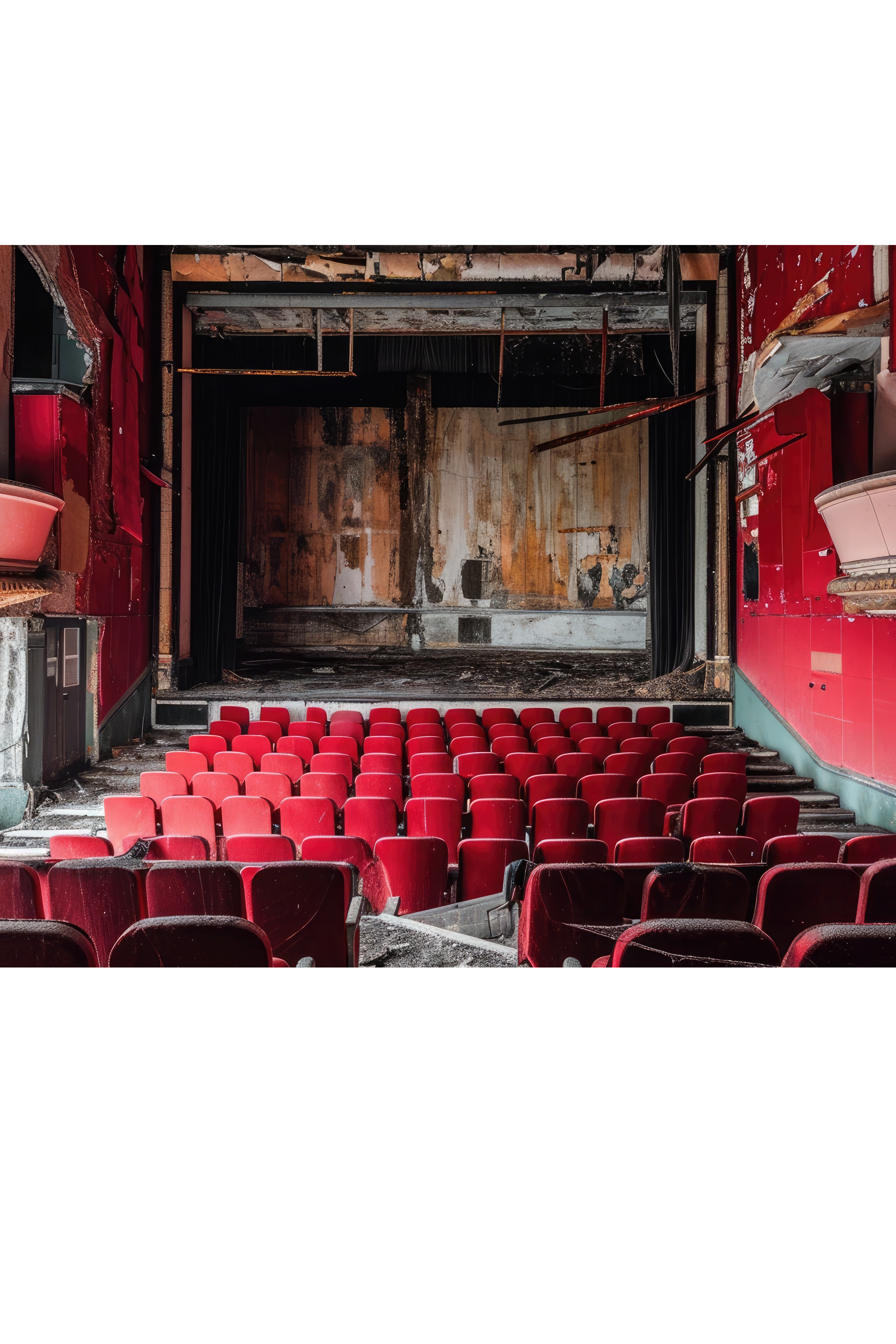
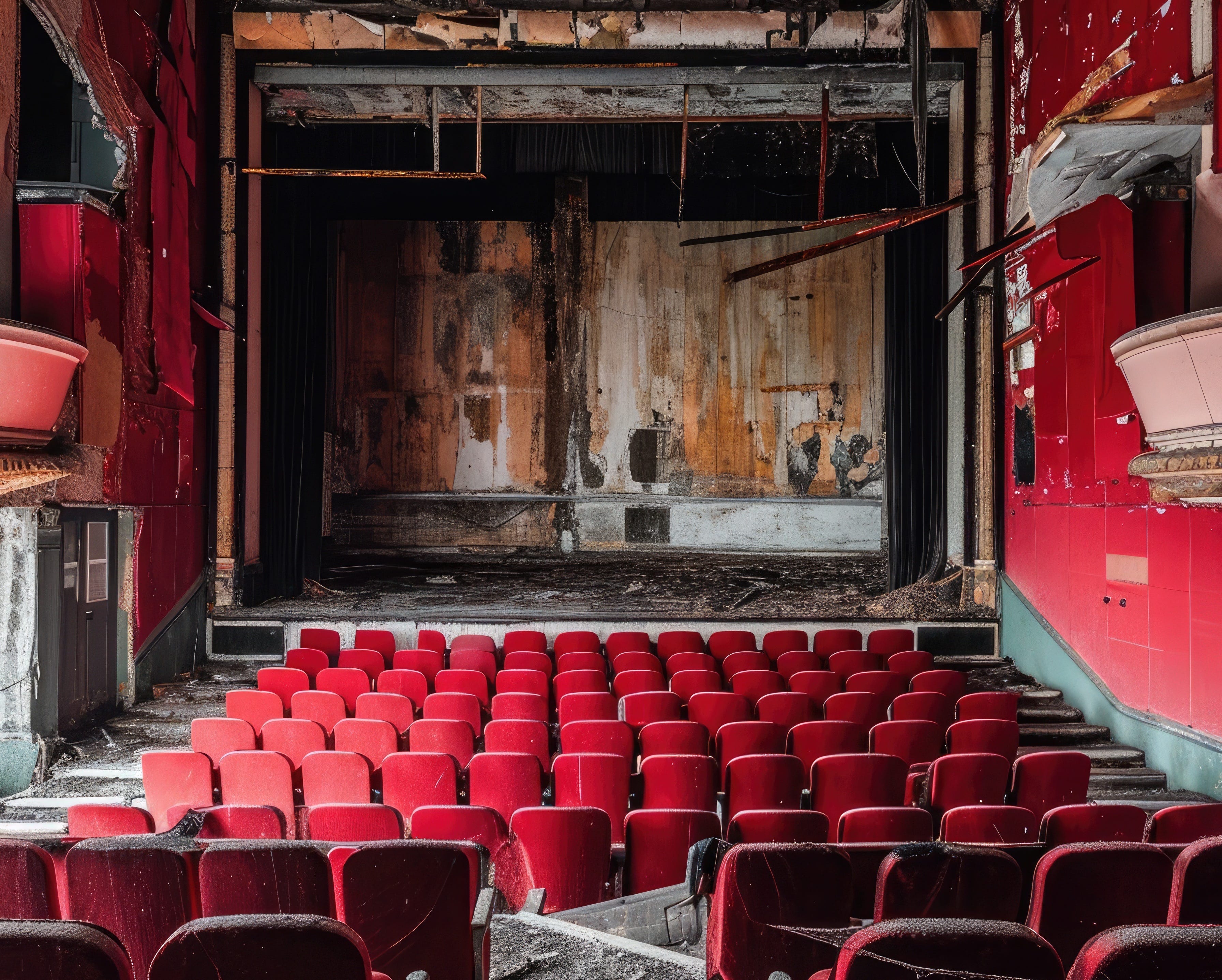
Our culture is now predominantly screen-led. We grew up with a small flickering screen in the corner of the room. Now, that screen is in our pocket, ever-present, ever on, constantly pushing what the industry calls content: material that fills the space between experiences. And yet we still assemble in communities to encounter art. This is not new: before there were screens there were stages. Culture lived not just in the art itself but in the act of witnessing it as a community.
The modern stage has changed little since Ancient Greece. Sure, lighting is better, scale, spectacle, but essentially the contract between the art and the audience remains the same. Theatre invites us to sit and stay. It reminds us that culture is shared. For the Ancient Greeks theatre was ritual. The construction and the performance were intended to give shape to communal experiences and they were bound to the civic and religious life of the community. Its effects were intensified by the audience, it could not be encountered privately.
While modern musicals no longer sit within an explicitly religious framework, they continue to perform a related civic function. They are structured events, fixed points in the calendar, held on sites of pilgrimage in spaces governed by rules distinct from the outside world: phones are silenced, lights dimmed, attention is collectively directed. The musical operates as a secular ritual, binding strangers together through repeated gestures and shared expectation.
The very idea that a musical could run for more than forty years would have been alien to the Ancient Greeks. Yet even the longest-running musical is experienced as one distinct moment in time. While the actors may repeat the same movements night after night, each performance unfolds once only, shaped by the audience and the conditions. It is the liveness of the performance and its symbiotic relationship with the audience that gives the form its power.
I love musicals. I’m interested in how the form operates not simply as entertainment but as an arena for shared emotional life. Often dismissed as light, or frivolous, musicals offer templates for how we express, contain or understand our feelings.
Not everyone will attend a Broadway or West End production or even watch a film musical, nonetheless the form’s logic has migrated beyond the theatre. Musicals normalise heightened expressions and legitimise public displays of vulnerability. A musical takes a story, attaches melody and repeats until it is embedded in the psyche. The form shapes how culture feels rather than what it depicts. Even without shared terminology, its emotional structures are widely recognisable.
This is not to say that all musicals manage this; some are more successful at functioning as shared cultural moments than others. Popularity alone rarely achieves durability. A musical can be critically and commercially successful without entering the zeitgeist. Endurance depends instead on a particular alignment of formal, social, and institutional circumstances.
What are those particular circumstances? A work that becomes a shared cultural experience emerges when certain conditions are met. At its core, the work must be recognisable. This does not mean it should be derivative or pastiche but rather that there should be emotional clarity that can be grasped quickly. The work must also be transmittable. Performance theorist Diana Taylor in The Archive and the Repertoire argues that cultural forms persist when they are able to be transmitted through embodied, repeatable practices rather than remaining fixed to a single text or moment. There should be elements that can be detached and circulated independently. It needs the ability to be quoted without requiring the full context to be present, to be understood without explanation, all the while still appearing to illuminate a shared emotional truth.
A work enters collective consciousness through a process rather than a leap. Its form will determine whether or not it can move beyond its original setting. When a form can be easily recalled, repeated, or detached from its point of origin, it enters the culture. Transmission allows recognition: the sense that something is already meaningful to others. Recognition invites repetition as a work is returned to, revived, and encountered again and again across time and context. Through repetition, meaning stabilises. What began as an experience becomes familiar, then embedded, until it no longer requires explanation. At that point, the work ceases to function merely as a text and begins to operate as cultural infrastructure that supports shared feeling rather than simply representing it.
Collective consciousness emerges when many individuals recognise the same emotional structure at the same time, with an awareness that others are recognising it too: not privately, but socially. This can occur within a narrow window of time such as when a work arrives into a moment of heightened social attention. It may unfold gradually as a ritual experience like the annual return to a work that has become culturally embedded. The work becomes a familiar emotional anchor for how we organise and understand feeling.
Musicals are adept at this process because their individual component parts can be easily detached and circulated independently: a cast recording, a poster, a trailer, a lyric. A song can stand alone, be encountered in isolation from the original and still carry significant emotional weight. In this way the work quickly becomes a conversational shorthand, gaining cultural significance beyond the stage itself. Because musicals, in sound and content, reflect society they frequently arrive into a space where there is an unresolved social feeling. Society poses a question, the musical responds as a form through which feeling can be expressed, and culture amplifies it. A musical can shape the collective consciousness when its form encounters the right social, temporal and institutional conditions that allow it to be shared, repeated and recognised at scale. A musical lingers, allowing time for its impact to grow.
It’s easy to drown in nostalgia here, to long for a golden age, to ask why this now happens so rarely. Shared cultural moments still exist and the digital age plays a huge role in facilitating them but we do, perhaps, mistake scale and ubiquity for significance. Some cultural forms endure, others explode then flicker away.
I catch myself, unexpectedly, humming a song from a musical I saw once as a child. I haven’t heard it since. I couldn’t sing you the rest of the score, or even tell you the full story, but the melody is intact. We curate what we choose to retain but sometimes, lodged somewhere beneath conscious recall, waiting to surface, something lingers.
Culture is, in part, what is available to us. It can come packaged and delivered directly requiring no thought, no engagement. We can breeze past it, barely noticing. But culture is also shaped by what we choose to experience together.
There are still moments when we decide where to place our attention, and with whom. Musical theatre offers one such moment. It asks us to gather, sit in shared time, attend to something that unfolds only once, and experience emotion as a community. It invites us to allow meaning to emerge from presence. In these moments, culture is not what happens to us; it is chosen by us, emerging from our presence and our community.